
Linker Tel
Integrated Silicon & Sensing Architecture for Edge Intelligence
Linker Tel Corp is a New York-based technology organization engineering a proprietary hardware and software architecture. We converge edge neural acceleration, multi-spectral optical sensing, high-bandwidth interconnect, and sub-watt sensor hubs into a unified handheld system envelope.
Intelligence that runs where you are, not where the servers are.
Architecture Overview
One Architecture.
Five Convergent Subsystems.
High-performance personal technology cannot be assembled by stacking off-the-shelf components inside a shared housing. Linker Tel is developing a vertically integrated architecture where sensing, silicon acceleration, and physical thermal design compound one another.
Optical & Spatial Sensing
Treating optical capture as a continuous perception challenge rather than a camera shutter event. Integrated multi-spectral and depth sensors route data directly into memory without software overhead.
Heterogeneous Neural Compute
Dedicated acceleration cores optimized for transformer attention mechanisms and low-bit quantized weights. Delivers instantaneous local inference with strict hardware-enforced privacy.
Thermal & Chassis Architecture
Structural magnesium and aluminum chassis designed as an active heat sink, dissipating peak compute thermal spikes without noisy active cooling or uncomfortable surface hotspots.
Continuous RF & Spatial Interconnect
Ultra-low-power short-range spatial interconnect maintaining low-latency synchronization with peripheral hardware, companion sensors, and local base infrastructure.
Deterministic Ambient Runtime
A low-overhead operating environment that prioritizes ambient sensor triggers and dispatches neural inference tasks with microsecond interrupt response times.

The Linker Phone Development Platform
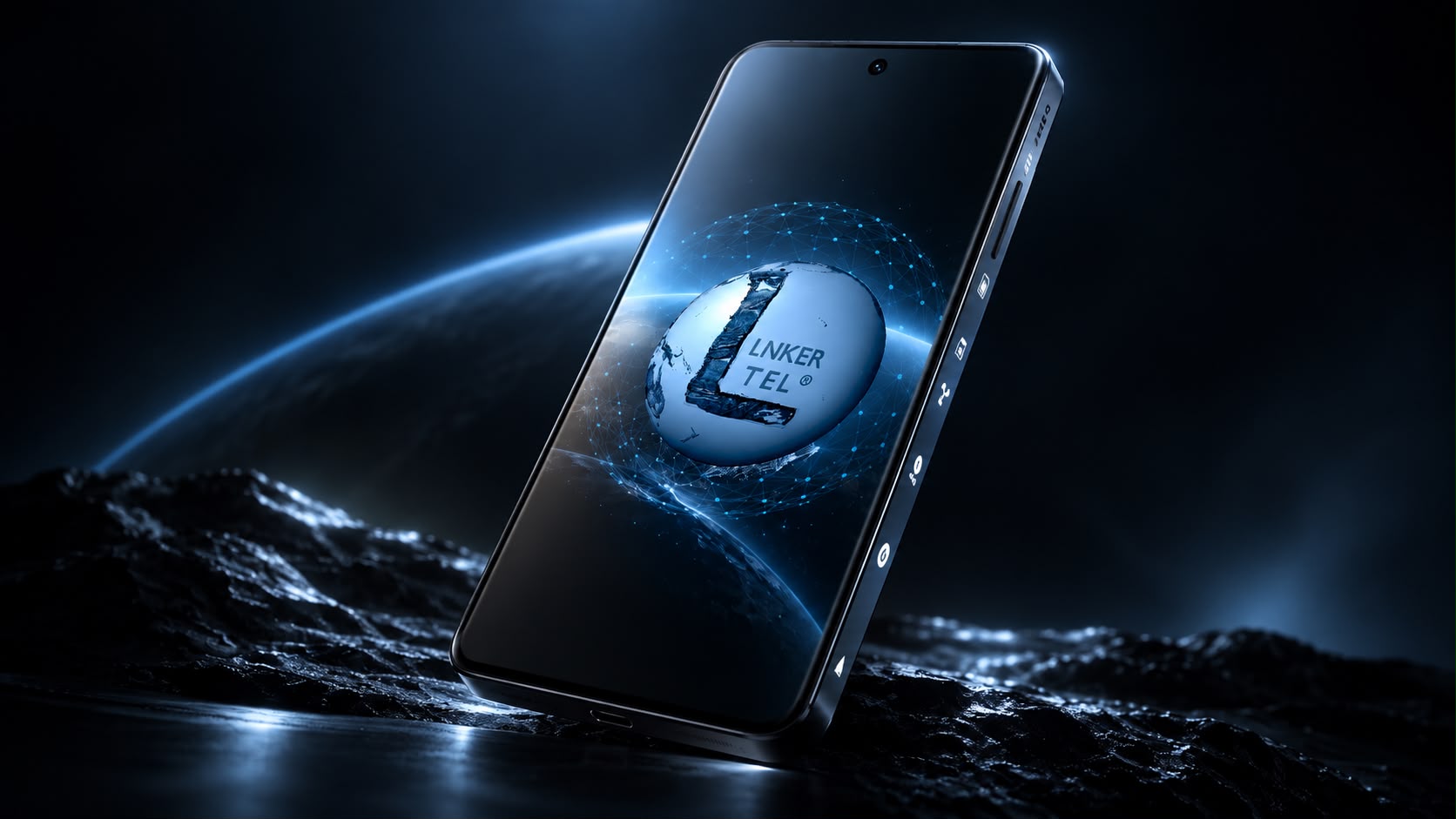
A tangible reference device built to validate our unified silicon architecture under rigorous real-world thermal, battery, and RF conditions.
Rather than treating the smartphone as a terminal that queries remote cloud servers for every intelligent query, the Linker Phone is engineered around localized computing sovereignty: high-capacity local model execution, deterministic sensor processing, and zero external telemetry transmission during core tasks.
From Cellular Voice to Ambient Edge Intelligence
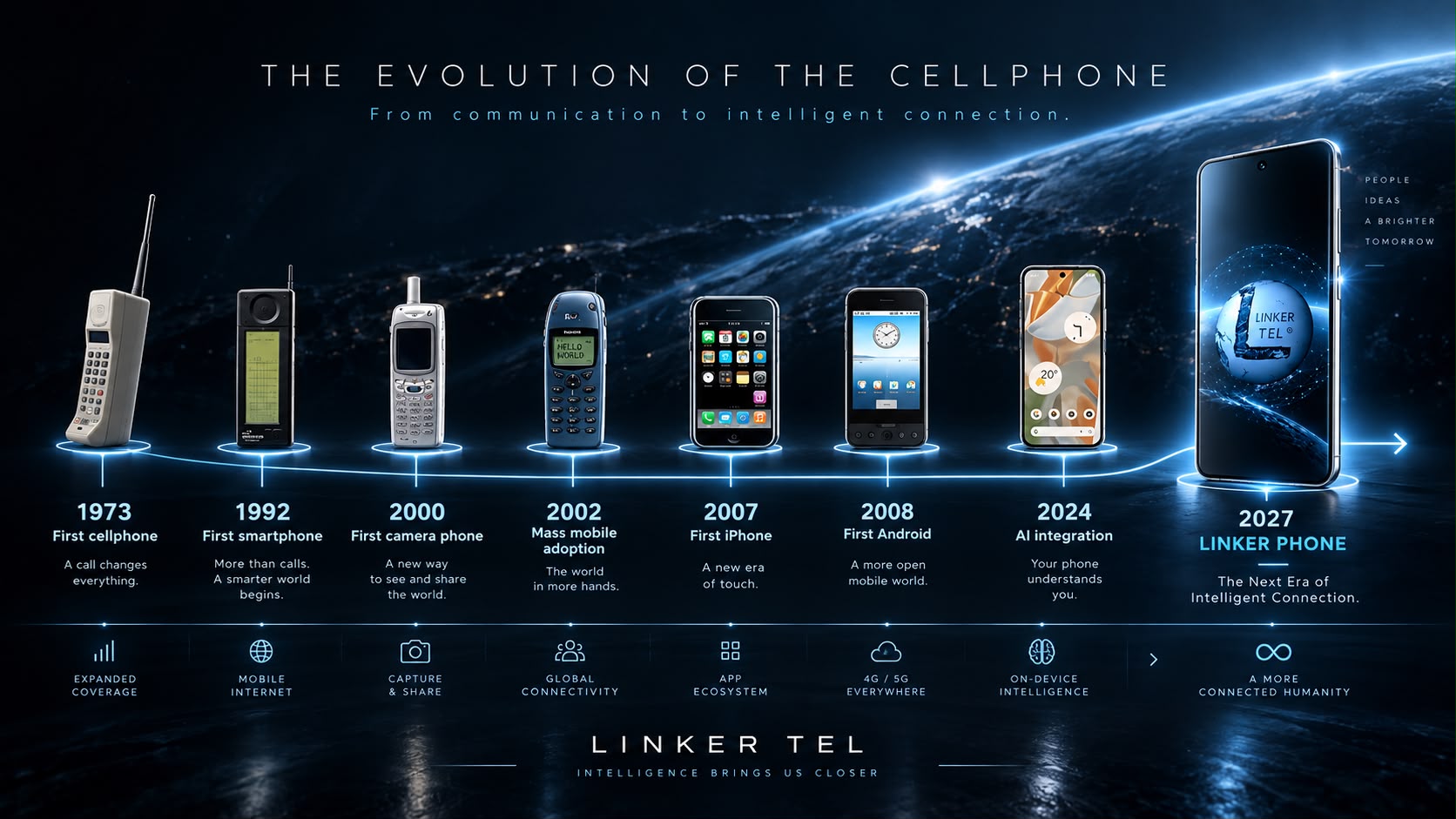
From the earliest cellular handsets in 1973 through the graphical smartphone era, handheld electronics have evolved from analog transceivers into client displays for cloud servers. Linker Tel is developing the next architectural phase: autonomous, localized intelligence that acts without cloud lag.
Supplier & Foundry Collaboration
Industrial Partner Engagement
Linker Tel is actively qualifying relationships with global semiconductor foundries, advanced packaging specialists, optical module manufacturers, and precision assembly partners.
We are currently establishing collaboration pathways across the following hardware categories:
Advanced lithography fabrication, heterogeneous system-in-package (SiP) modules, custom low-power NPU accelerators, and high-density LPDDR memory interfaces.
High-dynamic-range image sensors, multi-spectral sensor arrays, compact time-of-flight depth modules, and optical stabilization assemblies.
Ultra-thin vapor chambers, graphite heat spreaders, precision magnesium-aluminum die-casting, and structural composite enclosures.
Sub-6GHz and mmWave antenna integration, ultra-low-latency short-range radios, and high-efficiency power management ICs (PMICs).